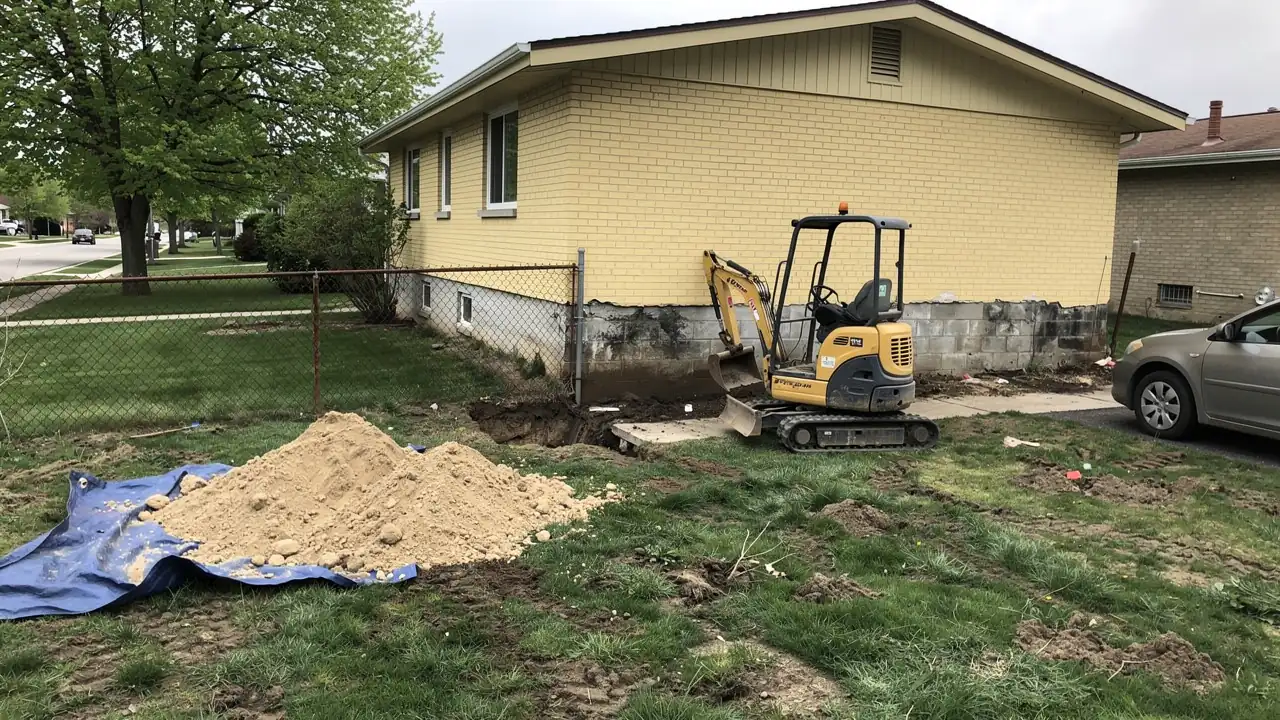
Mini excavator digging egress window in Waterloo

Excavation Services in Waterloo, Ontario

Guelph Excavation Pros is an excavating contractor serving Waterloo from our Guelph yard, about 30 minutes west along Highway 7. We dig foundations, pools, egress windows and service trenches for homeowners, landlords and builders across the city. Over 10+ years and 500+ jobs, we have learned where Waterloo ground and Waterloo rules differ from the rest of the region.

For an excavator, Waterloo is three cities in one. Northdale and the streets around the University of Waterloo and Wilfrid Laurier need bedroom egress windows and walkouts for licensed rentals. The west side builds custom homes and pools, while Uptown and the ION corridor fill tight lots with mid-rise infill.

Under most of it lies the Waterloo Moraine, the sand and gravel aquifer that supplies most of the Region of Waterloo's drinking water. That shapes how we slope trenches, where we fuel machines and how we remove an old heating oil tank. Our Waterloo excavation services are licensed, insured and WSIB covered, with a fixed written quote after a site visit.

What We Dig in Waterloo

Most Waterloo jobs fall into three groups, and each group lines up with a part of the city. Housing age, lot size and machine access change from one district to the next, so we plan the machine and the haul route before we price.

Rental Conversions Near the Universities

Landlords in Northdale, Lincoln Village and the older streets off Albert Street and King Street North call us most for bedroom egress windows and basement walkouts. Many 1950s and 1960s bungalows here have small basement hopper windows that cannot serve as a bedroom exit.

We excavate the well, expose the wall for the concrete cutter, tie a drain into the weeping tile and backfill with 19 mm clear stone. Our basement walkout and egress window excavation service covers the full process.

Custom Homes and Pools on the West Side

Westvale, Clair Hills, Columbia Forest and Laurelwood have the deeper lots where owners add inground pools, cabanas and walkout patios. Many of these yards back onto stormwater ponds or trail corridors, so we confirm grades and fence lines before the machine arrives.

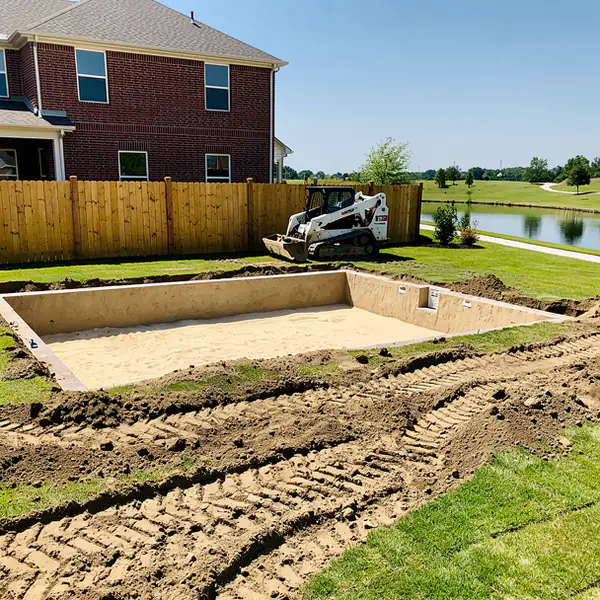
Moraine sand here digs fast but slumps, so pool walls get a slight batter and the base goes in soon after it is exposed. Our pool and pond excavation crews also haul the spoil, often 80 to 120 m³ of loose sand for a 4.9 by 9.8 m (16 by 32 ft) pool.

Uptown Infill and the ION Corridor

Intensification around ION stations such as Waterloo Public Square, Willis Way and Laurier-Waterloo Park puts new buildings on narrow lots beside occupied homes, rail and live utilities. These digs need shoring designs, staged trucks and traffic plans along King Street and Caroline Street.

We handle footing digs, service trenches and shoring and underpinning excavation for infill builders. O. Reg. 213/91 requires excavations deeper than 1.2 m (4 ft) to be sloped or supported, and on a zero-setback Uptown lot, support is usually the only option.

Building on the Waterloo Moraine

The Waterloo Moraine is a glacial ridge of layered sand, gravel and silty till under much of western Waterloo Region. It is the main recharge area for the aquifers behind at least 75% of the Region's drinking water, drawn through about 100 municipal wells. What happens in a Waterloo excavation can reach the tap.

For digging, moraine sand is easy on machines and hard on trench walls. Clean sand and gravel around Erbsville, Vista Hills and Laurelwood drains quickly but caves as it dries or as groundwater seeps in, so it is usually classed as Type 3 soil under O. Reg. 213/91.

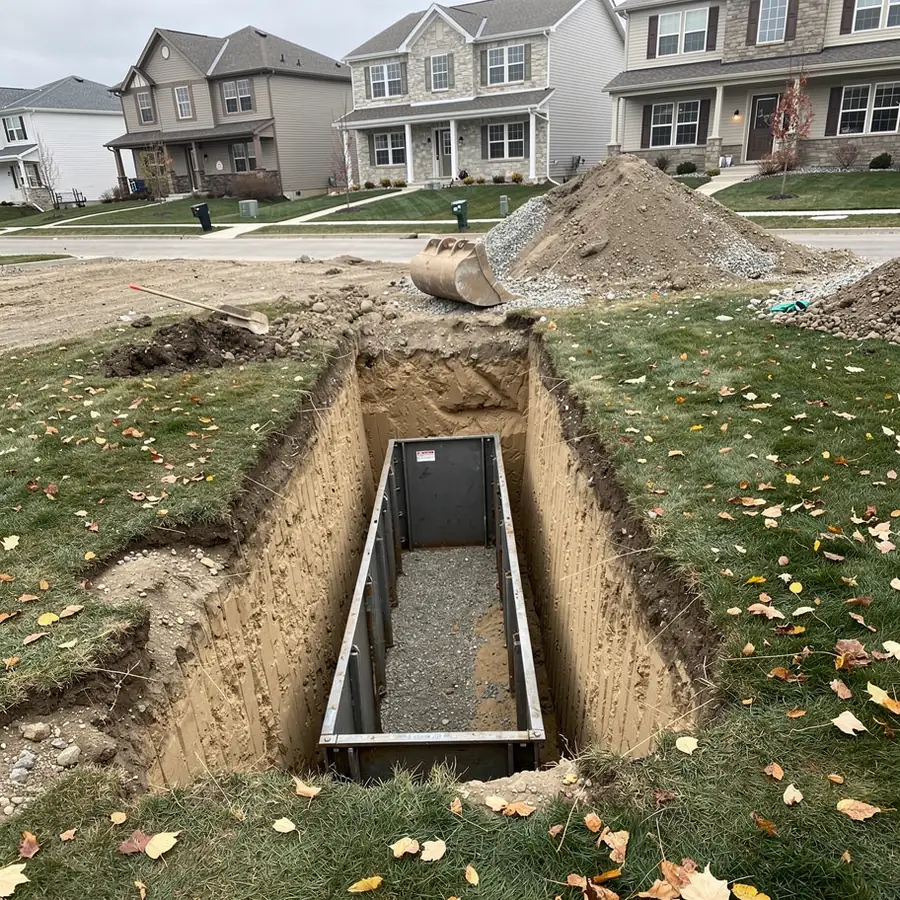
In that soil we slope the walls back at about 1 to 1 from the trench floor, or set a steel trench box before anyone enters a trench deeper than 1.2 m (4 ft). East of King Street the moraine gives way to firmer silty till, which stands longer in a vertical cut but sheds water poorly against a foundation.

Protecting the recharge area is part of every job. We refuel on a drip tray away from open excavations, carry a spill kit on every machine and never bring fill of unknown origin onto a moraine site.

Trench box in sandy Waterloo moraine soil

City of Waterloo Rules to Know Before You Dig

Three local requirements catch Waterloo homeowners and small builders most often. Each sits on top of the usual building permit and Ontario One Call locate, and each can stop a job if it is missed.

Wellhead Protection and Fuel Storage Limits

Large parts of Waterloo sit in vulnerable areas around municipal wells, mapped under the Grand River Source Protection Plan. Every building permit or planning application on those properties needs a Section 59 notice from the Region of Waterloo's Risk Management Official.

Activities such as residential heating oil storage and fuel handling may need a risk management plan or may be restricted. Check your address on the Region of Waterloo source water protection page, and we will build the screening into the schedule.

Lot Grading Plans

New homes in Waterloo are built to an approved lot grading plan, and the City expects finished grades to match it. Before sign-off, a professional confirms in a compliance letter that grades drain away from the building and follow the plan.

We grade to the plan elevations with a laser level and keep a strip at least 0.6 m (2 ft) wide around the house sloped at 2% or more. For an addition, ask the City early whether a new or revised grading plan is needed, since that answer is cheaper before the dig than after.

Tree Protection on Development Sites

The City of Waterloo tree by-law protects trees on City property, which includes most boulevard trees in front of older homes in Northdale, Uptown and Mary Allen. Damaging their roots without approval can lead to enforcement and replacement costs, so we fence the root zone before the excavator moves in.

On site plan and subdivision projects, tree protection is set as a condition of approval, with hoarding shown on the drawings. Rules for trees on private lots are different, so we confirm them with the City before anything is removed.

Excavating Near Laurel Creek and Conservation Lands

You need a Grand River Conservation Authority (GRCA) permit before excavating, grading or placing fill in a regulated area along Laurel Creek or its tributaries. Under O. Reg. 41/24, regulated areas include floodplains, valleys and wetlands, plus an allowance of about 15 m beyond a valley's top of bank and 30 m around a wetland.

Laurel Creek rises near Erbsville, fills the reservoir at Laurel Creek Conservation Area on Westmount Road North, then runs through the University of Waterloo campus, Columbia Lake and Silver Lake in Waterloo Park on its way to Uptown. Homes in Laurelwood, Lakeshore and the streets around Waterloo Park can sit inside the regulated limit without the owner knowing.

Pools, additions, retaining walls and large regrading jobs on those lots usually need a permit, and the review can add several weeks. We check the mapping when we quote, and the GRCA permits page explains the application.

From our Guelph yard we reach Uptown Waterloo in about 30 minutes via Highway 7 and the Conestoga Parkway. West-end sites near Erbsville Road take closer to 35 minutes.

Waterloo Neighbourhoods We Cover

We work in every Waterloo neighbourhood, and the typical job changes with the age of the houses and the soil under them. This table shows what we dig most often in each area.

Typical housing and excavation work by Waterloo neighbourhood
NeighbourhoodTypical housingCommon jobs
Northdale1950s to 1970s bungalows, student houses and new mid-riseEgress windows, walkouts, service trenches for redevelopment
UptownPre-1940 brick homes beside condo infillShored footing digs, sewer and water laterals, tight-access work
Lincoln Village1960s bungalows and back-splitsEgress windows, basement units, buried oil tank removal
Beechwood1970s and 1980s two-storey homes on large lotsPool replacements, patio and retaining wall digs
Lakeshore1970s to 1990s homes near Columbia LakeRegrading, wet basement digs, GRCA-regulated projects
Eastbridge1990s homes on firmer till toward the Grand RiverWeeping tile repairs, driveway widening, pools
Erbsville and Vista Hills2010s and 2020s builder homes on moraine sandPool digs, backyard grading, walkout patios
Westvale, Clair Hills, Columbia Forest, Laurelwood1990s to 2010s custom and semi-custom homesPools, cabanas, landscape grading

If you own an older home in Lincoln Village, Mary Allen or Uptown, ask about buried oil tanks before you dig, since many were left in place when owners switched to natural gas. We handle oil tank removal and contaminated soil removal under TSSA O. Reg. 213/01.

Typical Waterloo Excavation Projects

These are the Waterloo jobs we quote most often, with typical price ranges for the excavation scope. Access, soil, haul distance and permits move the number, and your fixed written quote follows a site visit.

  • Bedroom egress window: $1,800 to $3,800 for excavation, drain tie-in, window well and clear stone backfill, usually 1 day. Concrete cutting and the window are priced separately.
  • Basement walkout: $9,000 to $20,000 for excavation, haul-away, drainage stone and backfill around the new walls, over 3 to 5 days.
  • Fibreglass or vinyl pool dig: $4,500 to $9,000 including haul-away of the sand, over 1 to 2 days.
  • Buried oil tank removal: $2,500 to $5,500 for a residential tank with no leak. Soil testing and contaminated soil disposal are extra.
  • Infill footings and basement: $20,000 to $60,000 or more, driven mainly by shoring, depth and truck access.
Excavated pool hole in Waterloo backyard

Waterloo Excavation FAQs

Answers to the questions Waterloo homeowners, landlords and builders ask us most.

How big does a bedroom egress window need to be for a rental in Waterloo?

Under the Ontario Building Code, a bedroom escape window must open from inside without tools and give at least 0.35 m² (3.8 sq ft) of clear opening, with no dimension under 380 mm (15 in). If it opens into a window well, the well must leave at least 550 mm (22 in) of clear space in front of the window.

The City of Waterloo rental licence process asks owners to confirm building and fire code compliance, so an undersized basement bedroom window can hold up a licence. We size the well to suit your window; see our egress window excavation page for details.

Can you remove an old oil tank in a wellhead protection area?

Yes, and in Waterloo it matters more than in most places. A leaking tank can push heating oil toward aquifers that feed municipal wells, which is why the Region treats residential heating oil storage as a drinking water threat.

We pump out the remaining oil, cut and lift the tank, and have the soil tested before backfill. Any contaminated soil goes to a licensed receiving site rather than back into the hole.

Do I need a GRCA permit near Laurel Creek?

You need one if the work falls inside the GRCA regulated area: the floodplain, valley slopes, wetlands or the allowance around them. Pools, additions, retaining walls and fill placement are the usual triggers.

Check the GRCA mapping or ask us to check it during the quote. If a permit applies, start it before the building permit, because the City will ask for it.

How long does it take you to get to Waterloo?

About 30 minutes from our Guelph yard to Uptown and about 35 minutes to the west end. Our day starts at 6:00am, so machines are usually on a Waterloo site by 7:00am.

Get a Quote for Your Waterloo Project

Call 548-918-0387 or send the form, and we will arrange a site visit in Waterloo at a time that suits you. We answer Monday to Saturday from 6:00am to 9:00pm and Sunday from 9:00am to 9:00pm.

Your quote is fixed in writing once we have seen the site, the soil and the access.

  • Your street address and nearest cross street
  • Photos of the dig area and the access path, with the narrowest gate width
  • Drawings, a survey or the lot grading plan if you have one
  • Whether the home is a licensed rental or will become one
  • Any known oil tank or buried services on the property
  • Your preferred start window

Open Monday to Saturday 6:00am to 9:00pm and Sunday 9:00am to 9:00pm.

Call 548-918-0387Free Quote