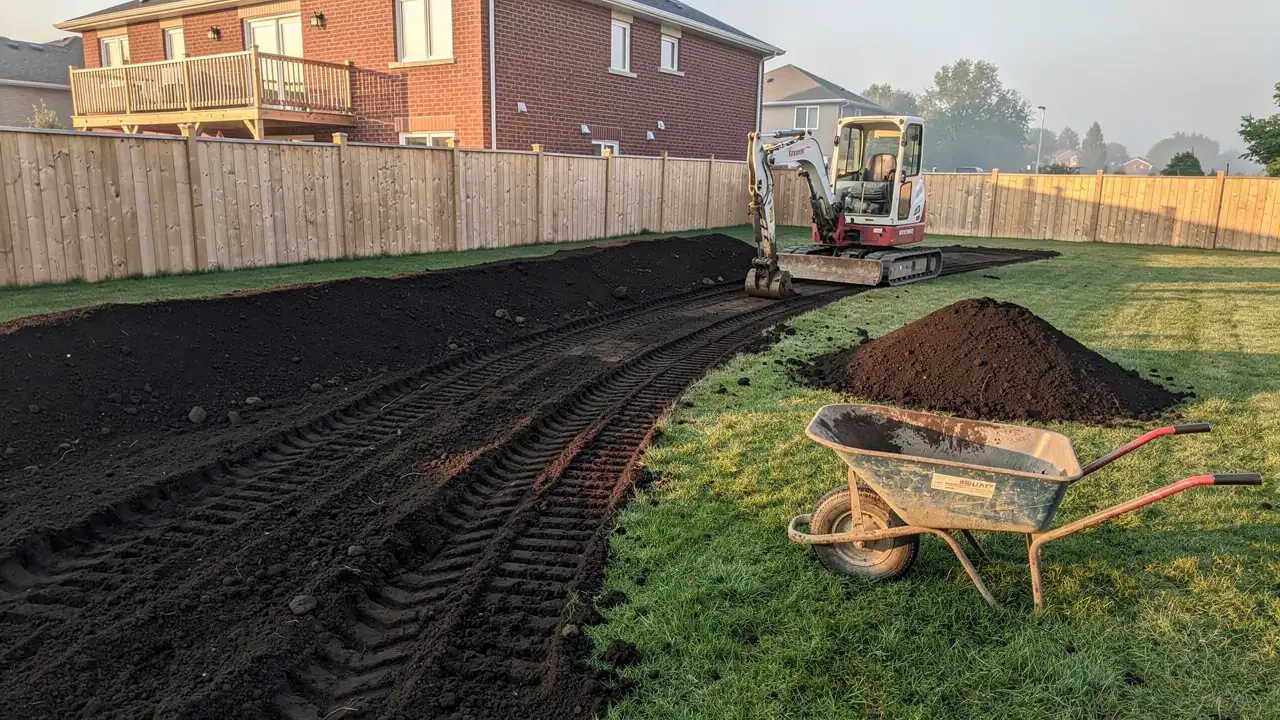
Excavator shaping topsoil berm in Guelph yard

Landscape Earthworks, Earthmoving and Soil Removal in Guelph

Guelph Excavation Pros moves dirt for landscapers, homeowners reshaping a yard and builders left with spoil piles after a foundation dig. We shape berms and terraces, import clean fill dirt, handle topsoil delivery and spreading, and take care of dirt removal when soil, clay and rubble have nowhere to go.

Across 10+ years and 500+ jobs in Guelph and Wellington County, we have learned that the cheapest cubic metre is the one that never leaves the property. Every earthmoving job starts with a measured volume, a plan for where each load goes and a route that keeps tracks off septic beds, tree roots and buried lines.

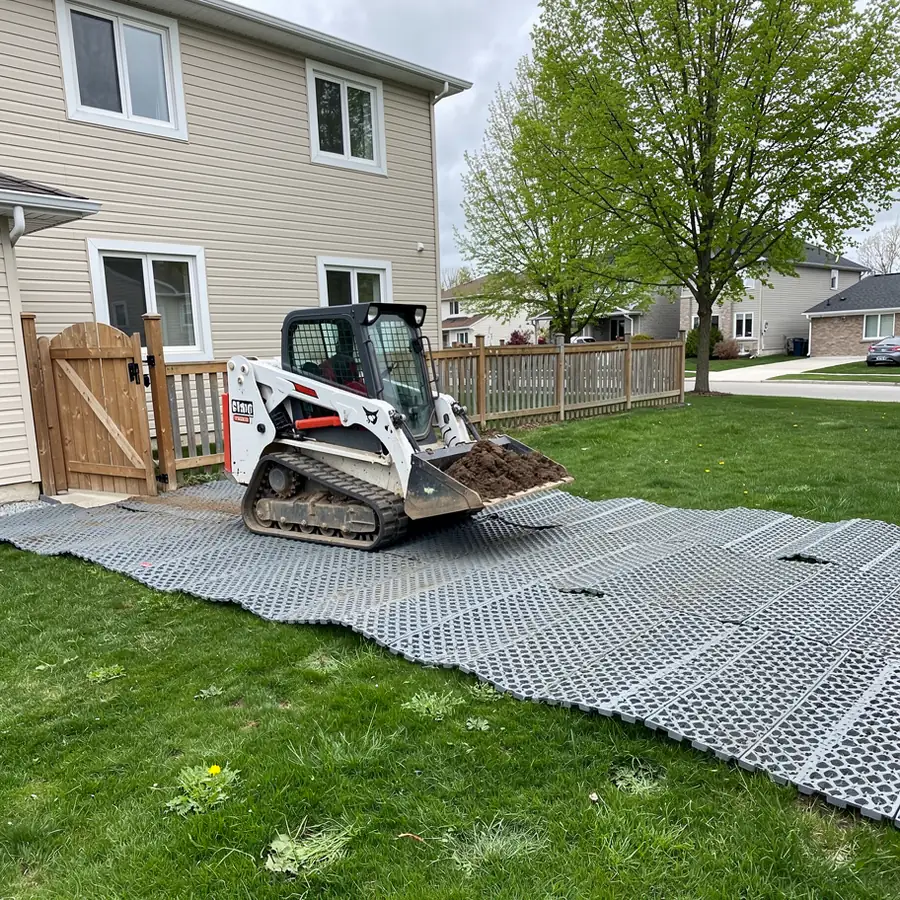
For landscape excavation behind a fence, our compact tracked loaders and mini excavators fit through backyard gates and travel on ground protection mats, so lawns come out intact. Soil that does leave is tracked load by load to a receiving site that can legally accept it under Ontario's excess soil regulation.

Landscape Earthworks and Earthmoving Services

We handle five kinds of earthmoving work, from shaping one privacy berm to hauling 40 loads of spoil off a new-build lot. Most jobs combine two or three of them, such as removing heavy clay and replacing it with triple mix for a new garden.

Each service below is quoted from measured volumes, so you know the load count before the first truck arrives.

Berms, Terraces and Contouring

A berm is a shaped mound of compacted soil, usually 0.6 to 1.5 m (2 to 5 ft) high, that adds privacy, blocks road noise or steers runoff around a patio. We build the core from clean fill or surplus site soil, compact it in layers and cap it with 150 mm (6 in) of topsoil for planting.

Terraces turn a slope into flat, usable steps for play areas or vegetable beds. Where a terrace needs a wall taller than about 1 m, we pair the earthwork with our retaining wall construction so the soil is held properly.

Topsoil Supply and Spreading

We deliver and spread screened topsoil for lawns and triple mix for gardens, placed to the depth the planting needs. Sod wants 100 to 150 mm (4 to 6 in) of topsoil, while new garden beds do best with 300 mm (12 in) or more.

Screened soil has been passed through a mesh to remove stones, roots and clods, which is what lets a lawn roller leave a smooth surface.

Fill Import and Compaction

Low spots and sunken sections of yard are raised with clean fill that we compact in 150 to 200 mm (6 to 8 in) lifts with a plate compactor or roller. Compacting in thin layers is what stops the area from settling into a dip after the first spring thaw.

We only import fill from known sources and keep the paperwork, because unknown fill can carry contaminants or buried debris that becomes your problem later. Filling an old in-ground pool is its own job, covered on our swimming pool removal page.

Soil and Spoil Removal

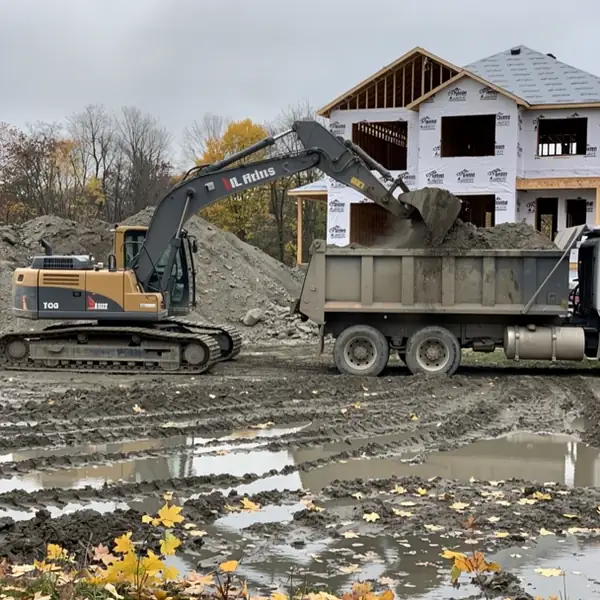
We load and haul away dirt piles, excavated clay and spoil left by foundation digs, pool installs and landscaping projects. A compact track loader or excavator fills tandem or triaxle dump trucks from your driveway, and we sweep the street before we leave.

Builders often call us when the excavator has gone but a 200 m³ spoil pile is blocking the framers. With two or three trucks cycling, a pile that size is usually cleared in one or two days.

Backyard Clean-Outs

A backyard clean-out removes tired landscaping in one visit: overgrown shrubs, old timber walls, broken patio slabs, gravel paths and buried rubble. We sort concrete, brush and soil into separate loads, because mixed loads cost more to dispose of.

Thick slabs and old pads go to our concrete breaking and removal crew, who bring a hydraulic breaker for the job.

Moving Soil Without Wrecking Your Yard

We protect the yard by spreading machine weight, planning a route before we start and keeping every load off fragile ground. Ruts, crushed septic pipes and cracked driveways are the most common damage on earthmoving jobs, and almost all of it is avoidable.

Our rubber-tracked compact loaders and mini excavators run at roughly 4 to 5 psi of ground pressure, a fraction of what a wheeled loader or a loaded dump truck puts on the lawn. Across soft turf we lay interlocking HDPE ground protection mats, which spread the load further and keep tracks from tearing grass in wet weather.

  • Route marked before work starts: septic tank and leaching bed, well, gas and hydro lines, irrigation, low-voltage lighting and buried pet fences
  • Root zones of trees you want kept fenced off, since Guelph's Private Tree Protection By-law can apply to injuring or removing regulated trees
  • Plywood or mats over driveways, curbs and interlock wherever trucks cross
  • Lighter loads on damp days, and rescheduling when the clay is saturated

Clay-loam soil around Guelph turns greasy after rain, and a loaded machine on wet clay packs it so tightly that grass struggles for years. When the ground is too wet, we move the date rather than leave you with a compacted, rutted yard.

Track loader on ground mats in Guelph

Types of Fill and Topsoil

The right fill depends on what goes on top: lawns and gardens need living topsoil, while patios, sheds and driveways need a granular base that will not settle. Using topsoil as deep fill is the most common mistake we see, because its organic content rots and shrinks over time.

Fill and topsoil options for Guelph yards
MaterialBest useSettlementTypical delivered cost
Screened topsoilLawns, sod and seed, in the top 100 to 150 mmModerate, about 10 to 15% as organics break down$40 to $60 per m³
Triple mix (topsoil, peat and compost)Garden beds, planters and new shrub bordersHigh; plan to top up after the first year$55 to $85 per m³
Clean fillRaising low areas and filling holes under a topsoil capLow when compacted in lifts$10 to $30 per m³, sometimes free from nearby sites
Granular B (OPSS pit-run gravel)Deep fill under sheds, patios and driveways; backfill beside structuresVery low when compacted$28 to $45 per tonne
ClayBerm cores, pond liners and sealing grade away from a houseLow if compacted near its ideal moisture; drains poorlyOften free from site cuts; heavy to haul

Prices are typical ranges for loads delivered within about 30 minutes of Guelph and change with volume, season and supplier. Topsoil is often sold by the cubic yard; one cubic yard is 0.76 m³, so a 10 m³ order is about 13 cubic yards.

Where Excavated Soil Goes: Ontario's Excess Soil Rules

Soil that leaves your property is called excess soil, and Ontario regulates where it can go under O. Reg. 406/19, On-Site and Excess Soil Management. In plain terms, soil must be reused or taken to a site allowed to receive it, never tipped on a farm field or vacant lot without approval.

Larger projects carry the heavy paperwork. A project that sends 2,000 m³ or more of excess soil off site, roughly 250 tandem loads, generally needs a notice filed on the RPRA Excess Soil Registry, along with sampling and a tracking system before soil leaves. Properties with a higher-risk past use, such as a former gas station or industrial site, can trigger those steps at much lower volumes.

Most residential jobs, from a pool dig to a garden regrade, fall well under that threshold and are generally exempt from registry filing. They still have to follow the reuse rules, so we keep our own record for every load showing its source, destination and volume.

Reusing soil on site is almost always cheaper than hauling it. Every load that stays to build a berm or fill a low corner saves both the trucking and the tipping fee, and the province's guide to handling excess soil sets out the full rules.
Excavator loading clay spoil in Guelph

How We Plan an Earthmoving Job

Every earthmoving job runs through four stages: measure, protect, move and finish. Getting the order right matters, because soil that gets handled twice costs twice.

  1. Measuring Volumes

    We measure the area and depth on site, convert it to cubic metres, then add a swell factor for the soil type. Dug clay expands 25 to 40% once loosened, so 10 m³ in the ground becomes about 13 m³ in the truck.

    From that loose volume we count truckloads: a tandem dump carries about 8 to 10 m³ and a triaxle about 12 to 14 m³. Heavy wet clay hits the legal weight limit before the box is full.

  2. Protecting the Site

    Before a machine moves, we request free Ontario One Call locates for gas, hydro and communication lines, and mark private lines such as septic pipes and irrigation ourselves. Ground mats go down along the haul route, and temporary fencing keeps machines away from trees and beds you want left alone.

  3. Cut, Fill and Haul

    We cut the high areas first and push that soil straight into the low areas that need raising, compacting as we go. Only the true surplus is loaded onto trucks, and imported fill or topsoil arrives after the cut is finished, so no pile is moved twice.

  4. Final Shaping

    The finished surface is set to fall away from buildings, at least 2% and steeper next to the foundation, before topsoil goes on at an even depth. We fine-rake by machine and by hand and leave the ground ready for sod, seed or planting.

    If the yard has a drainage problem rather than just a shape problem, our lot grading and levelling service sets exact elevations with a laser level.

Soil Removal and Earthmoving Pricing

Soil removal around Guelph is priced either per truckload, typically $300 to $600 per tandem load hauled and dumped, or by the hour for machine and truck time plus tipping fees at the receiving site. Jobs of a few loads are usually quoted per load, while larger cut-and-fill projects are quoted hourly or as a lump sum.

Clean, sorted soil costs the least to dispose of, and loads mixed with concrete, roots or garbage cost the most. After a site visit we give a fixed written quote that names the load count and where the soil is going.

What drives earthmoving and soil removal cost
Cost driverWhy it mattersTypical effect
VolumeMore loads spread the cost of bringing machines and trucks to sitePer-load price drops on jobs over about 10 loads
Soil typeClay is heavier and swells more than sandy loam, so it fills more trucksClay jobs can need 20 to 30% more loads
Mixed debrisRubble, roots or garbage in the soil limit which sites will accept itMixed loads can cost twice as much as clean fill to dispose of
Distance to the receiving siteTrucks are paid by the hour, including the driveEach extra 15 minutes each way adds about $40 to $70 per load
AccessNarrow gates and long carries mean smaller machines and more tripsBackyard-only access can add 20 to 40% to machine time
Season and ground conditionsWet spring clay slows loading and needs more matsSpring jobs may run longer; we schedule around rain

Hourly rates in the Guelph area run about $110 to $160 per hour for a mini excavator or compact track loader and $110 to $150 per hour for a tandem dump truck. When a job is priced hourly, your quote lists each rate separately.

Earthmoving and Soil Removal FAQs

How much does soil removal cost per load?

Expect about $300 to $600 per tandem load in the Guelph area, covering loading, trucking and the dump fee for clean soil. The price climbs with a longer drive to the receiving site, heavy wet clay, or soil mixed with rubble and roots.

A pile you can reach from the driveway costs less than one inside a fenced backyard, because the loader can fill trucks directly.

Can you take clay, rocks and broken concrete?

Yes, we haul all three, but keeping them in separate piles lowers the cost. Clean clay and soil go to fill sites, while concrete and rock go to recyclers that crush them into aggregate.

Once concrete, asphalt or garbage is mixed into soil, many receiving sites refuse the load or charge a much higher rate.

Do I need a permit to bring fill onto my property in Guelph?

Often, yes. The City of Guelph Site Alteration By-law requires a permit to place or dump fill, remove topsoil or change grades, unless the work is exempt, for example because it falls under a building permit, an approved grading plan or the by-law's small-volume exemptions.

Lots near rivers, wetlands or floodplains may also need a Grand River Conservation Authority permit. Just outside the city, Guelph/Eramosa requires a permit for grade changes over 10 cm, so we check the rules for your address before any fill arrives.

How many truckloads is my project?

Multiply length by width by depth in metres to get the in-ground volume, add about 30% for swell, then divide by 9 for tandem loads. A 6 m by 9 m (20 ft by 30 ft) area dug 0.6 m (2 ft) deep is about 32 m³ in the ground, roughly 42 m³ loose, or five tandem loads.

We confirm the count on site, since rocky or very wet soil changes the numbers.

Can my soil be reused on site?

Usually, and it is the cheapest option because nothing is trucked or tipped. Clean surplus soil can build berms, fill low corners or sit under a new topsoil cap.

Reuse does not work when the soil is organic muck, full of debris, or there is simply no low area worth raising. If testing shows fuel oil from an old buried tank, the soil goes through our oil tank and contaminated soil removal process instead.

Earthmoving From Guelph to Cambridge and Milton

We run earthmoving and soil removal crews from our Guelph yard to sites within about a 30-minute drive. A short run between your property and the receiving site keeps trucking costs down.

Guelph

Topsoil delivery, berms and spoil hauling on earthmoving jobs across Guelph, from tight infill lots in the Ward to larger yards in the south end.

Milton

Berm building and soil hauling on larger Milton properties, where Conservation Halton and Niagara Escarpment rules can apply around Campbellville.

Get an Earthmoving Quote

Tell us roughly how big the pile or area is, what is in it and how a machine can reach it. We will come back with a load count and a fixed written price.

  • Approximate size of the pile or area, and the depth if you are digging
  • Photos of the soil and anything mixed into it
  • Access details: gate width, driveway length and any slopes
  • What you want delivered: topsoil, triple mix or clean fill, and roughly how much
  • Your address and preferred timing

We answer at 548-918-0387 from 6:00am to 9:00pm Monday to Saturday and 9:00am to 9:00pm on Sunday.

Open Monday to Saturday 6:00am to 9:00pm and Sunday 9:00am to 9:00pm.

Call 548-918-0387Free Quote