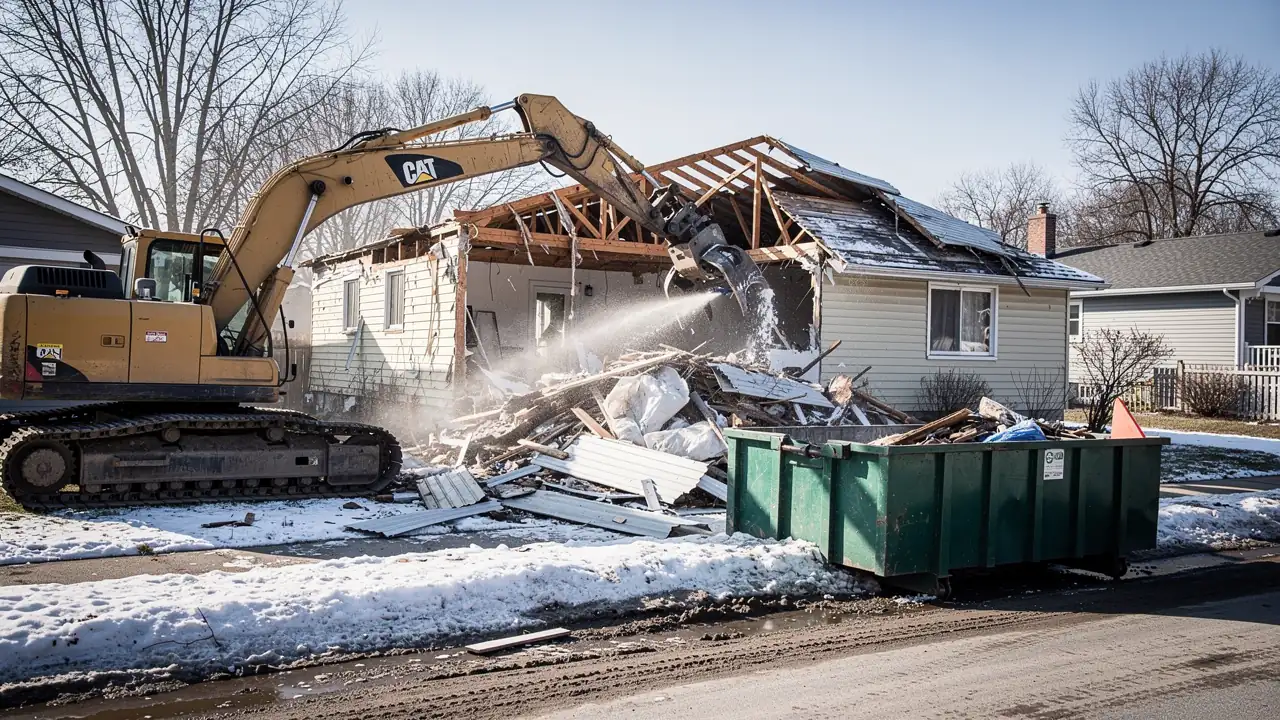


Excavator demolishing old house in Guelph

Demolition Contractor in Guelph for Homes, Garages and Commercial Buildings

Guelph Excavation Pros is a demolition contractor for owners rebuilding on their lot, infill builders clearing a teardown and commercial landlords stripping or removing a building. We take down houses, garages, sheds, decks and interiors, then sort and haul the debris away.

Because we are an excavation company first, the crew that knocks the house down can also break out the foundation and dig the new basement. That saves hiring a separate demolition company and excavator, and it closes the gap between the two trades on your schedule.

Over 10+ years we have handled the steps that come before a teardown: the City of Guelph demolition permit, designated substance surveys, heritage checks and utility disconnects. We are licensed, insured and WSIB-covered, and we price house demolition and garage demolition as a fixed quote after a site visit.

Demolition Services in Guelph

We demolish five kinds of structure, from a backyard deck to a commercial building. The equipment changes with the job, but every one starts with a permit check and ends with a clean, graded site.

Full House Demolition

A full teardown removes the house, the basement walls and the footings, leaving a clear lot ready for a new build. Most single-family homes in Guelph come down in 1 to 3 days with an excavator fitted with a thumb or demolition grapple.

Debris is loaded straight into roll-off bins or dump trucks and sorted as it comes down, so the lot does not sit under a mixed pile.


Garage, Shed and Outbuilding Removal

Detached garages, sheds, small barns and workshops usually come down in a single day, including the concrete slab or footings underneath. We break the slab, send it to a concrete recycler and leave level ground ready for sod, a new garage or a driveway extension.

Interior and Selective Demolition

Selective demolition removes part of a building while the rest stays standing, such as gutting a basement, stripping a commercial unit to its shell or taking off a rear addition. It is done by hand and with compact machines, with temporary supports installed to the engineer's design wherever a wall carries load.

Commercial and Industrial Demolition

We demolish commercial buildings, light-industrial units and agricultural structures, often in phases so neighbouring tenants or operations keep running. Phased work follows a written demolition plan, the designated substance report and a site safety plan, with hoarding and dust control along shared walls.

We send our WSIB clearance certificate and certificate of insurance with every commercial quote.

Deck, Patio and Hardscape Removal

Backyard clear-outs take out decks, interlock patios, low walls, pool surrounds and concrete walkways. Wood decks are dismantled so lumber and hardware can be separated, and concrete or pavers go to recycling.

If the yard also has an old in-ground pool, our swimming pool removal service handles the shell and the backfill.

Before Demolition: Permits and Hazard Checks

Four checks come before any building is demolished in Guelph: a permit, a designated substance survey, a heritage check and utility disconnects. Skipping any of them can stop the job, bring fines or put workers and neighbours at risk.

We handle the paperwork and the coordination for each step, and you sign the applications as the owner.

City of Guelph Demolition Permit

A demolition permit from the City of Guelph is required to tear down most buildings over 10 m² (108 sq ft), which covers nearly every garage and house. The application usually needs a site plan, confirmation that utilities are disconnected, the designated substance report and proof the property is not heritage-protected.

Permits are issued under the Building Code Act, and a complete application is typically reviewed within about two weeks.

Asbestos and Designated Substance Surveys

Ontario's Occupational Health and Safety Act requires the owner to identify designated substances, such as asbestos, lead, mercury and silica, before demolition work is tendered or started. A qualified consultant inspects the building, samples suspect materials and writes the designated substance survey report.

Asbestos is common in buildings from before 1990, in vermiculite attic insulation, pipe wrap, floor tiles, drywall joint compound and stucco. It must be removed under O. Reg. 278/05 before any machine starts.

Heritage-Listed Properties

Guelph keeps a Municipal Register of Cultural Heritage Properties, and the owner of a listed but not designated property must give the City at least 60 days' written notice before demolishing under the Ontario Heritage Act. A designated property needs Council's consent.

We check the register for your address before applying, because older homes in the Ward, Exhibition Park and downtown are the most likely to be listed.

Utility Disconnects

Gas, hydro, water and sewer must be shut off and capped before demolition starts. Enbridge Gas removes the meter and cuts the service, Alectra Utilities disconnects power, and the City caps the water service and the sewer lateral at the property line.

Disconnects can take 2 to 6 weeks to schedule, so we request them as soon as you decide to demolish.

Demolition Methods

We choose the demolition method based on how quickly the site must be cleared, how much material can be salvaged and how close the neighbours are. Most projects mix methods, such as stripping by hand first and then bringing in the excavator.

Comparing demolition methods
MethodSpeedCostRecycling rateBest use
Mechanical (excavator with grapple or thumb)Fastest: a house in 1 to 3 daysLowest per square foot50 to 75% with sorting on siteFull house and garage teardowns on open lots
Selective by handSlow: days to weeksHigher, driven by labourHigh for the parts removedInteriors, additions and work beside occupied space
Deconstruction for salvageSlowest: 1 to 3 weeks for a houseHighest labour cost, partly offset by salvage valueUp to 80 to 90%Older homes with reusable brick, timber beams or hardwood

On narrow Guelph infill lots, where the neighbouring house can stand 1.2 m (4 ft) away, we combine hand work along the tight side with machine work from the open side.

Sorting and Recycling Demolition Waste

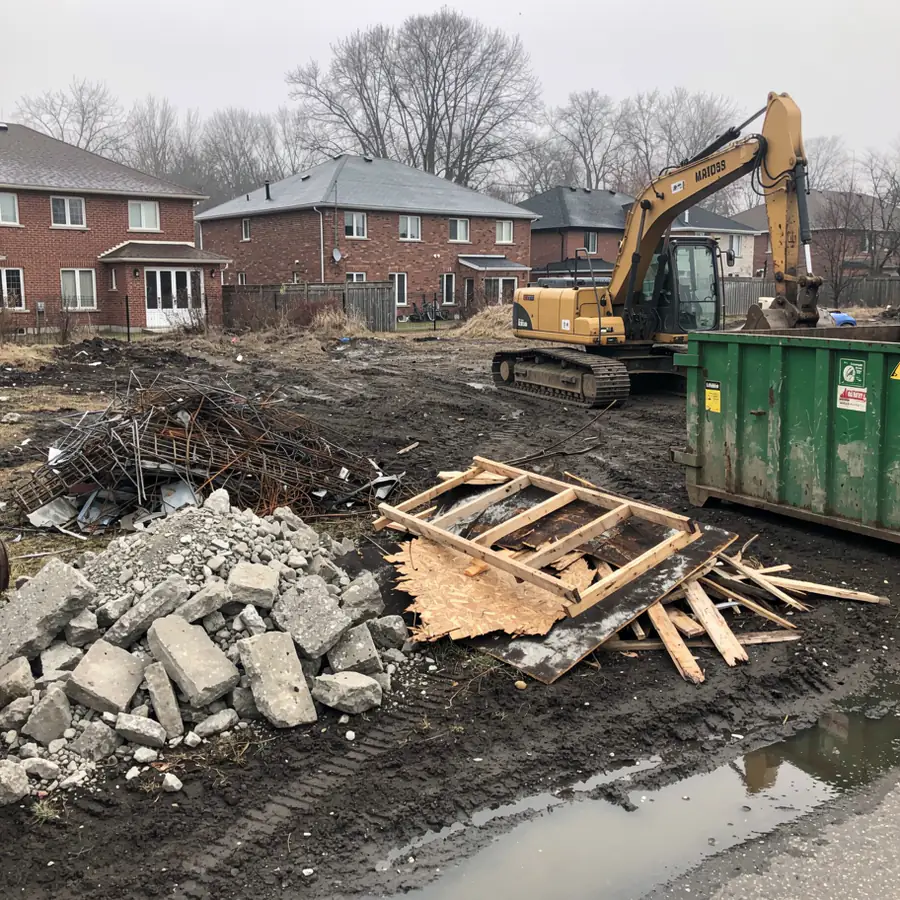
We sort demolition debris on site so that as much as possible is recycled instead of landfilled. Concrete, metal, clean wood and drywall each go to a different destination, and sorted loads cost less to dispose of than mixed ones.

  • Concrete and brick go to a crusher and come back as recycled aggregate for fill or granular base.
  • Steel and copper, including wiring, ductwork, rebar and pipe, are sold for scrap.
  • Clean wood is separated from painted or treated wood and chipped for reuse.
  • Drywall is kept dry and apart, because gypsum can be recycled but contaminates other loads.
  • Asphalt shingles go to processors that recycle them into paving material where that option is available.
  • Mixed waste that cannot be separated is the only part bound for landfill.

On a typical house teardown, sorting keeps well over half the weight out of landfill. Clean crushed concrete from your own foundation can sometimes stay on site as backfill, which saves a round trip for the trucks.

Sorted demolition debris piles on Guelph lot

Our Demolition Process

A demolition runs through five steps, and the first two often take longer than the teardown itself. Once permits and abatement are done, a typical house is down and its basement removed within a week.

  1. Site Assessment and Permits

    We walk the structure, check for basements, fuel tanks, septic systems and shared walls, and measure access for machines and bins. Then we assemble the permit application, request utility disconnects and order the designated substance survey.

    If an old buried fuel oil tank turns up, our oil tank removal team takes it out to TSSA requirements before the teardown.

  2. Hazard Removal

    A licensed asbestos abatement contractor removes asbestos and any other designated substances first, working inside a sealed area under O. Reg. 278/05. The consultant then confirms by inspection or air testing that the building is clear before our machines arrive.

  3. Structure Teardown

    The excavator pulls the building down in a controlled order, roof and upper floor first, working away from neighbours and overhead wires. We mist water over the debris and the work face to keep dust down, and load material straight into sorted bins or trucks.

  4. Foundation and Slab Removal

    With the building gone, we break out the basement floor, foundation walls and footings with a hydraulic breaker or the excavator bucket. The concrete goes to a recycler, and any remaining service stubs are capped at the depth the City requires.

  5. Backfill or Excavation for the Rebuild

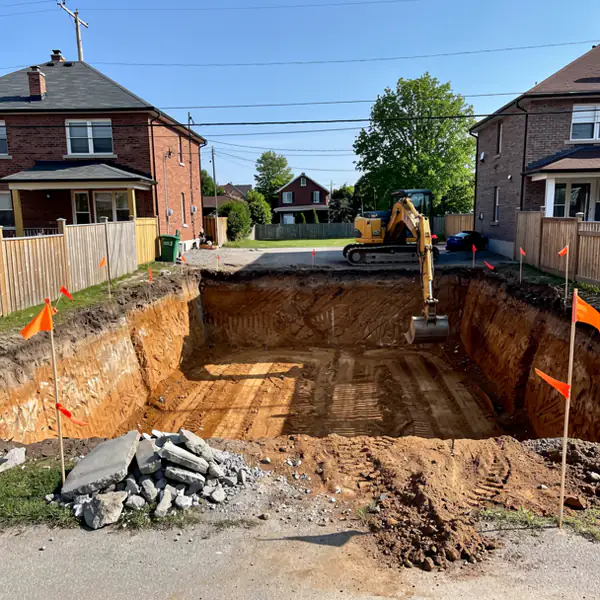
    If the lot will sit empty or be landscaped, we backfill the hole with clean compacted fill and grade it to drain. If you are rebuilding, we skip the backfill and go straight to excavating the new basement to your drawings.

Demolition Cost in Guelph

Demolishing a detached single-car garage in Guelph typically costs $3,500 to $8,000 including slab removal, and a full house demolition $20,000 to $45,000 including the basement and disposal. Asbestos abatement, when needed, is added on top and can range from $2,000 to $20,000 depending on how much is found.

We fix the price in writing after the site visit and the designated substance survey, so the building's hidden problems are known before you sign.

What drives demolition cost
Cost driverWhy it mattersTypical effect
Size of the structureMore volume to pull down, load and haulPrice scales roughly with floor area and number of storeys
Building materialsBrick, block and stone weigh far more than wood frameMasonry buildings can cost 15 to 30% more to haul
Hazardous materialsAsbestos, lead paint or mould need licensed removal firstAdds $2,000 to $20,000 before demolition starts
Foundation removalBreaking and hauling basement walls, floor and footingsAdds about $5,000 to $15,000 on a typical house
Haul distance and tipping feesDisposal sites charge by the tonne, and trucks bill by the hourMixed waste costs far more per tonne than sorted concrete or metal
Access and neighboursTight lots need smaller machines, hand work and protectionInfill lots can add 10 to 25%

Garden sheds under 10 m² usually cost $800 to $2,500 to remove, and decks $1,000 to $4,000 depending on size and footing type.

One Crew From Teardown to New Foundation

Booking demolition and excavation with one company keeps your rebuild on one schedule and one contract. Our crew demolishes the old house, removes its foundation and digs the new one with the same machines, often in the same week.

With separate trades, the lot can sit for days or weeks between the demolition company leaving and the excavator arriving, and each side blames the other for whatever is left in the hole. We avoid both, because old footings come out exactly where the new ones go and soil and concrete leave on one hauling plan.

For the new house, our foundation excavation crew digs to the surveyor's stakes and the engineer's footing depth, so your forming contractor can start once the footing inspection passes.

Excavator digging new basement after Guelph teardown

Demolition FAQs

Do I need a permit to demolish a garage in Guelph?

Yes, if the garage is larger than 10 m² (108 sq ft), which nearly every single-car garage is. A small detached shed of 10 m² or less generally needs no demolition permit, but any power or water feeding it still has to be safely disconnected.

Heritage status or a wall shared with a neighbour can add requirements, so we confirm before we start.

How long does a house demolition take?

The teardown itself usually takes 1 to 3 days for a typical Guelph house, and foundation removal adds another 1 to 3 days. The preparation takes longer: permits, the substance survey, abatement and utility disconnects often add up to 3 to 8 weeks.

Do you test for asbestos before demolition?

Yes. Every building we demolish has a designated substance survey before work starts, carried out by a qualified environmental consultant who samples suspect materials, and any asbestos found is removed by a licensed abatement contractor before we begin.

You receive a copy of the survey and the clearance for your records and the permit file.

Can you demolish the house and dig the new basement?

Yes, and it is the most efficient way to rebuild. We demolish, remove the old foundation and excavate the new basement on one schedule, with soil and concrete handled in a single hauling plan.

If the new home has a deeper basement or sits close to a neighbour, we plan shoring for the excavation at the same time.

What happens to the old basement?

It is either removed completely or broken up and filled, depending on what comes next. For a rebuild, we take out the walls, floor and footings so the new foundation sits on undisturbed soil.

For a lot that will stay empty, the floor is broken so water can drain, the walls come down below grade and the hole is filled with clean, compacted material. The demolition permit sets the minimum, which we confirm with the building department.

Demolition in Guelph, Cambridge and Kitchener

Our demolition crews work from Guelph across Waterloo Region, within about a 30-minute drive. Each city runs its own demolition permit process and heritage register, which we check for every address.

Cambridge

Garage, shed and house demolition for Cambridge property owners in Galt, Preston and Hespeler, including older stone and brick buildings near the Grand River.

Get a Demolition Quote

Send a few photos and the basic details, and we will plan the permits, disconnects and teardown. You receive a fixed written price after a site visit.

  • Photos of the structure from each side, plus the interior if it is a house
  • Approximate size: footprint, number of storeys and whether there is a basement
  • The age of the building, which tells us how likely asbestos is
  • Whether you are rebuilding, and your plans or drawings if you have them
  • Your address and target date for the teardown

Phone 548-918-0387 to talk it through; we pick up from 6:00am Monday to Saturday and from 9:00am on Sunday, until 9:00pm every day.

Open Monday to Saturday 6:00am to 9:00pm and Sunday 9:00am to 9:00pm.

Call 548-918-0387Free Quote