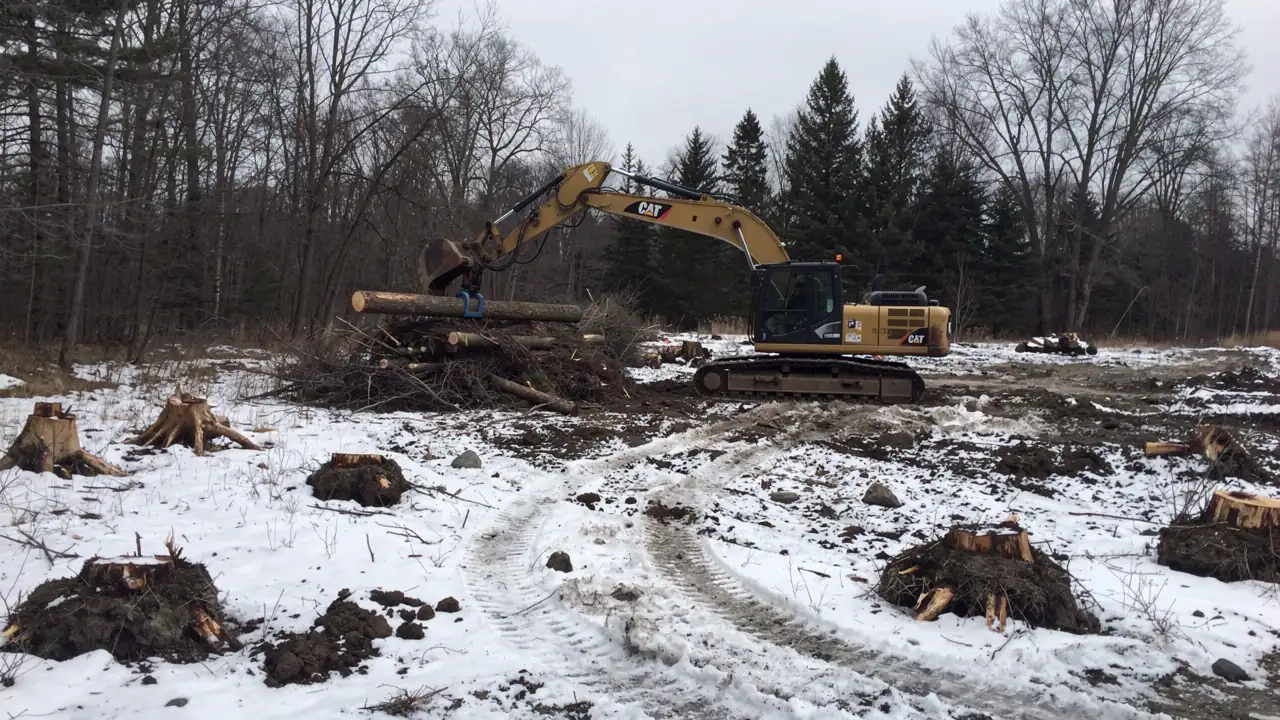
Excavator clearing trees on Guelph rural lot

Site Preparation and Land Clearing in Guelph

Guelph Excavation Pros clears and prepares land for lot owners, custom home builders and commercial developers across Guelph and Wellington County. We remove trees, brush and stumps, strip and save topsoil, pull boulders and build compacted pads the next trade can start on right away.

A ready site is cleared to the marked limits, grubbed of roots, stripped to firm subgrade, rough graded to drain and ringed with sediment control. It also has the paperwork behind it: tree permits, conservation authority approval where needed and locates on file.

Over 10+ years and 500+ jobs, our crews have cleared tight infill lots inside the city and multi-acre rural parcels full of fieldstone, wet hollows and old fence lines. That range of ground is why our site preparation quotes rarely hold surprises.

Site Preparation and Land Clearing Services

Our lot clearing and site preparation work breaks into five job types. A small residential lot may need only two or three of them, while a new rural home site usually needs all five.

Brush, Tree and Stump Removal

We clear with an excavator fitted with a hydraulic thumb, which lets us push over, lift and pile trees without dragging them across the site. Stumps come out with the root ball, get shaken free of soil and are piled for chipping or haul-away, and the holes are backfilled and compacted.

Topsoil Stripping and Stockpiling

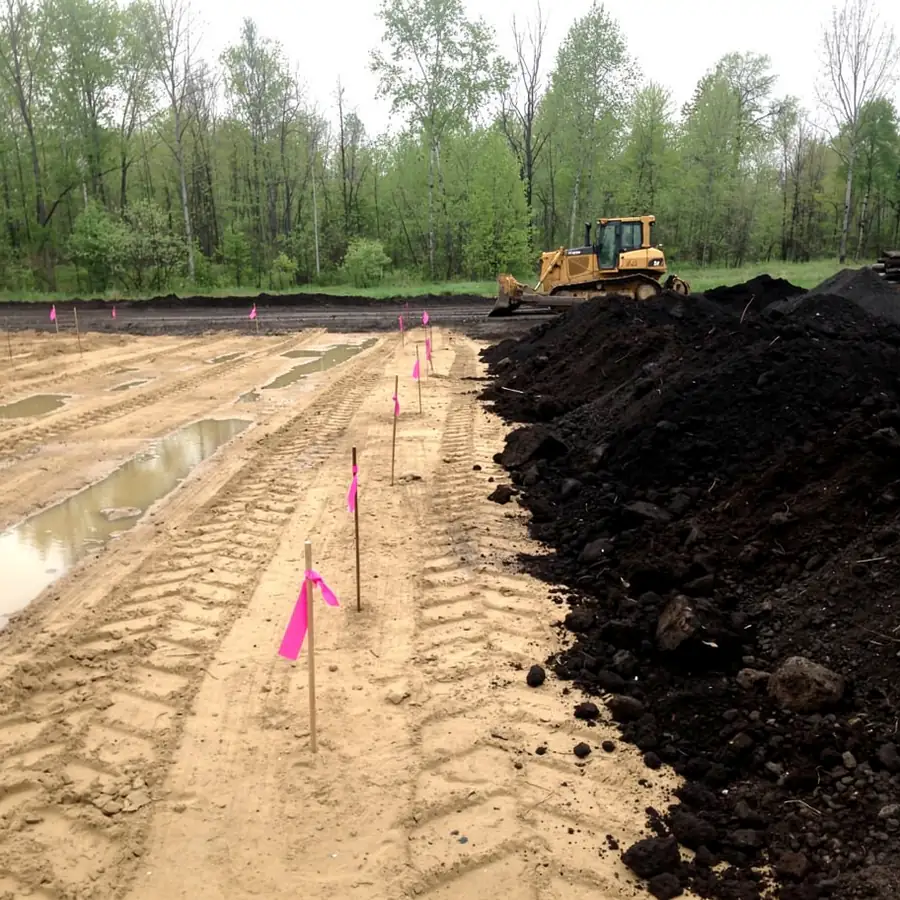
Topsoil is too soft and organic to build on, but it is worth keeping for final landscaping. We strip it from the building and driveway footprint and stockpile it on the lot, away from the dig and clear of drainage paths, ready to spread back at final grade.

Piles that sit over the winter get a ring of silt fence or a quick cover crop so they stay put until they are needed.

Rock and Boulder Removal

Wellington County fields are full of glacial boulders left by the last ice sheet, and some are the size of a small car. We dig them out, set aside the best ones for landscaping or armour stone walls, and break up or truck away the rest.

Building Pad Preparation

For a house, shop or garage, we cut high spots, fill low ones with compacted granular and level the pad to the elevation on your site plan. Our foundation excavation crew can then dig footings during the same mobilization.

Erosion and Sediment Control

Bare soil starts washing away in the first heavy rain. We install silt fence, rock check dams and sediment traps before clearing begins, protecting nearby creeks, roadside ditches and neighbouring yards from muddy runoff.

On larger sites we also lay a clear stone construction entrance so loaded trucks do not track mud onto the road.

What a Lot Needs Before Construction

Before any concrete is poured, a lot needs all topsoil and organic material removed from under the building, a firm subgrade and properly compacted fill. Miss one of those and the building sits on ground that keeps moving for years.

Topsoil and buried roots decompose and compress over time. A slab or footing poured on top can drop 25 to 50 mm (1 to 2 in) unevenly, which shows up as cracked floors, sticking doors and gaps along the trim.

Poor compaction causes the same damage more slowly. Loose fill dumped in one thick layer settles every time rain soaks it, dragging the ground beside the foundation down until it tilts toward the house.

That reverse slope is how many wet basements begin. We rough grade every pad to shed water from day one, which gives the finished lot grading a sound starting point.

Soft spots get fixed, not buried. We proof-roll the stripped subgrade with a loaded machine, and any wet clay pocket that pumps or ruts is dug out and replaced with compacted Granular B, sometimes over a geotextile separator.

Topsoil stripped and stockpiled on building lot

Clearing Methods Compared

The best clearing method depends on what happens to the land next. Ground that will carry a building or driveway needs stumps and roots removed completely, while a trail, pasture or view corridor can often be mulched in place.

Land clearing methods side by side
MethodBest forWhat's left behindTypical cost
Excavator and thumbMature trees, building footprints, mixed brush and stumpsClean, grubbed ground plus piles of trunks, brush and stumps$140 to $200 per machine hour; roughly $3,500 to $9,000 per acre
Forestry mulcherDense brush, saplings and small trees up to about 20 cm (8 in)A 50 to 100 mm (2 to 4 in) mulch layer; stumps and roots stay in the ground$2,000 to $5,000 per acre
Stump grindingA few stumps in a lawn or gardenWood chips, with the stump ground 150 to 300 mm (6 to 12 in) below grade and roots left in place$100 to $400 per stump
Stump extractionStumps under future buildings, driveways or septic bedsA hole to backfill and compact; root ball piled or hauled$150 to $500 per stump, less in bulk with an excavator

Mulching is quick and leaves no piles, but the mulch layer and roots have to come off before anything is built. Ground stumps are fine under lawns and gardens, yet they still rot and sink beneath a structure, so extraction is the only method we use inside a building footprint.

Brush and stump piles are chipped, trucked to a wood recycling yard or cut into firewood lengths you keep. Open burning needs a municipal burn permit and is often not allowed on smaller lots, so we do not plan around it.

Permits and Timing Before You Clear

Three sets of rules decide when and how land can be cleared around Guelph: the City's tree by-law, federal protection for nesting birds and conservation authority regulations. We check all three before pricing a job, since any one of them can move the start date.

Guelph Private Tree Protection By-law (2025)

The City's updated Private Tree Protection By-law (2025)-21059 requires a permit before regulated trees on private property are removed or injured. Whether a tree is regulated depends on its trunk diameter, measured 1.4 m above the ground, and on the property, so we confirm the threshold for your address with the City before any cutting.

Outside the city, the County of Wellington and Halton Region each have woodland by-laws that apply to larger stands of trees.

Bird Nesting Season

The federal Migratory Birds Convention Act makes it illegal to disturb or destroy the active nests of most bird species. In southern Ontario the main nesting period runs from about early April to the end of August, so we either clear outside that window or have a qualified biologist complete a nest survey just before work starts.

Conservation Authority Regulated Areas

Land near wetlands, watercourses, floodplains and steep valley slopes is regulated under O. Reg. 41/24. In the Grand River watershed, clearing or grading there needs a GRCA permit, and in Milton the same role falls to Conservation Halton.

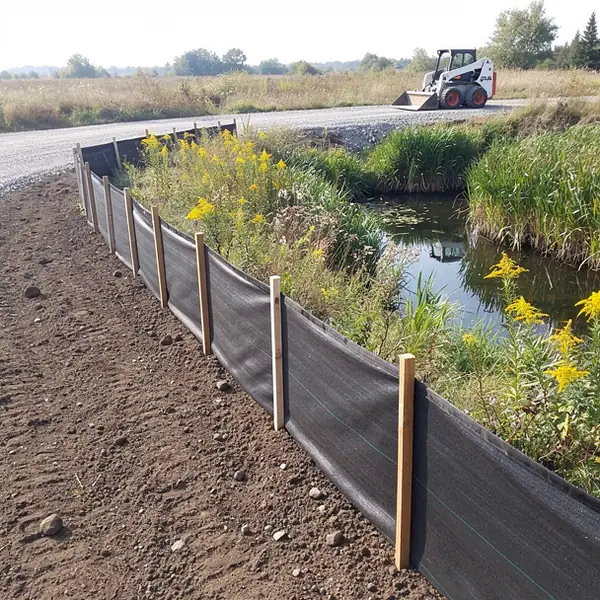
Silt fence along cleared lot in Puslinch

Our Site Preparation Process

We work through five stages, and the first two happen before a single tree comes down. Clearing, stripping and rough grading a one-acre residential lot typically takes three to six working days once permits are in hand.

  1. Site Walk and Clearing Limits

    We walk the property with you or your builder, survey in hand, and flag the clearing limits, the trees to keep and the stockpile areas. Locates are requested through Ontario One Call at the same time.

    On rural lots we also fence off the future septic bed so machines stay off that native soil and it keeps its ability to absorb effluent. Our septic system excavation team builds the bed later in the project.

  2. Silt Fence and Tree Protection Hoarding

    Before machines move, silt fence goes in along the low side of the work area, keyed into a shallow trench so water cannot run underneath. Trees you are keeping get protection hoarding at the drip line or the distance set in the tree permit, keeping machines off their roots.

  3. Clearing and Grubbing

    Clearing takes out the trees and brush, and grubbing removes the stumps and roots below them. We work from the edges inward, piling material as we go so the site stays passable for trucks.

    Older rural lots hide surprises such as barbed wire grown into fence-line trees, buried farm debris and forgotten rock piles. We pull these out as we go and set aside anything that needs separate disposal, like scrap metal or treated posts.

  4. Strip, Stockpile and Rough Grade

    With vegetation gone, we strip topsoil down to firm subgrade, stockpile it and shape the subgrade so water drains off the pad and away from future building areas. Surplus subsoil is spread on site or trucked away by our earthmoving and soil removal crew.

    Any soil trucked off the property is sent to a receiving site approved for it under O. Reg. 406/19, following Ontario's guidance on handling excess soil. Keeping topsoil and clean subsoil on the lot is usually cheaper and avoids that paperwork altogether.

  5. Pad Ready for Forming

    The building pad is filled with granular in compacted lifts, brought to the design elevation and checked with a laser. When we leave, your foundation contractor or slab former can set up without regrading anything.

Land Clearing and Site Prep Pricing

Land clearing around Guelph is priced by the machine hour, roughly $140 to $200 per hour for an excavator and operator, or by the acre on larger parcels. Light brush often runs $2,000 to $4,000 per acre, while heavily treed land with stumps and haul-away can reach $8,000 to $15,000 per acre.

Building pad preparation is quoted separately because it depends on how much granular fill the pad needs. After a site walk, you receive a fixed written quote with every item listed.

What moves the price of clearing and site prep
Cost driverWhy it changes the priceTypical impact
Tree density and sizeMature hardwoods take longer to fell, pile and process than brush and saplingsHeavily wooded land can cost three to four times as much as brush
Stump countEach stump is a separate dig, shake-out and backfill$150 to $500 per stump when extracted
Haul-away or mulchTrucking wood and stumps off site adds loads and disposal fees, while mulching in place avoids themHaul-away adds $1,500 to $5,000 per acre
AccessSoft ground, steep slopes or a narrow laneway slow the machines or call for matsAdds 10 to 30%
BouldersLarge glacial stones need a bigger machine or breaking$150 to $400 per boulder, or hourly when there are many
Pad fillGranular B and Granular A are bought by the tonne and placed in compacted lifts$25 to $45 per tonne supplied and placed

Hourly pricing suits small or unpredictable lots, since you pay only for the machine time used. Per-acre pricing suits larger, uniform parcels, and on those we commit to a total once we have walked every corner of the property.

If an old house, barn or outbuilding still stands on the lot, our demolition service can take it down as part of the same project and price.

Land Clearing FAQs

Here are straight answers to the questions lot owners and builders ask before clearing land around Guelph.

Do I need a permit to clear trees in Guelph?

Often, yes. Guelph's 2025 Private Tree Protection By-law requires a permit to remove regulated trees on private property, based on trunk diameter and the lot, and conservation authority rules can apply on top of it near water. We check your trees against the by-law before quoting and help with the application.

What happens to the trees and stumps?

You choose. We can mulch brush in place, chip and haul everything to a wood recycling yard, or cut the trunks into firewood lengths and stack them on site for you.

When is the best time of year to clear land?

Late fall and winter are best. Nesting season is over, frozen ground carries heavy machines with far less rutting and the lot is ready when the spring building season opens.

Can you prepare a pad for a shop or garage?

Yes. We strip the topsoil, proof-roll the subgrade, then place about 300 mm (12 in) of Granular B and 150 mm (6 in) of Granular A in compacted lifts, extending the pad at least 0.6 m (2 ft) past the building line. Large shops or poor soils may need a geotechnical engineer to set the fill specification.

How much topsoil gets stripped?

Most Wellington County lots carry 150 to 300 mm (6 to 12 in) of topsoil. It runs thinner on the sandy, gravelly moraine around Puslinch and deeper in low, wet hollows, where dark organic soil can reach 0.5 m (20 in) or more.

Lot Clearing in Puslinch, Milton and Around Guelph

Most of our clearing work is on rural and edge-of-town parcels within half an hour of Guelph. Puslinch and the Campbellville area of Milton make up a large share, with infill lots inside Guelph filling the rest of the schedule.

Puslinch

Puslinch parcels are often wooded with mixed hardwoods on gravelly moraine, and nearby wetlands frequently bring GRCA rules into play. See our Puslinch excavation and site work.

Milton

Rural lots around Campbellville sit close to the Niagara Escarpment, where Niagara Escarpment Commission and Conservation Halton approvals can apply. More about our Milton and Campbellville excavation.

Request a Site Prep Quote

Send us the basics and we will walk the property, mark the limits and return a fixed written quote. Reach us at 548-918-0387 or info@guelphexcavation.ca, seven days a week.

  • Lot size and the area you want cleared
  • Your survey, site plan or grading plan, if you have one
  • Photos of the trees, brush and any stumps or boulders
  • What will be built and when you hope to start
  • Whether you want the wood hauled away, mulched or kept as firewood

Open Monday to Saturday 6:00am to 9:00pm and Sunday 9:00am to 9:00pm.

Call 548-918-0387Free Quote